
DEI Workplace and BIPOC Resources
To continue our support for the BIPOC community during National Minority Mental Health Awareness Month, we thought it would be a great idea to share resources. If you are looking for ways to support or understand the plight of the BIPOC community, here are some DEI workplace and BIPOC resources to start you on your journey.
Note: Descriptions and links are taken directly from the site where you can find the resource from.
DEI and Workplace Resources
Black Creatives is not a list. It’s an exclusive talent agency network serving over 15,000 creatives, entrepreneurs, and business partners globally.
The Memo is devoted to helping women of color take control over their careers by providing access to important resources and real-world advice on their career development.
The Mentor Method brings teams together by providing tools that increase opportunity, improve culture, and welcome diverse ideas. To help employers empower their people to achieve their full potential, The Mentor Method platform matches people seamlessly within the organization. By harnessing the power of mentorship from within, they help enterprise organizations retain, grow, and develop talent no matter their location.
With a dual-sided business model, The Life Currency works on the front and back end of workforce development; preparing the next generation of employees while using directly from our consumer base to fuel internal workplace consulting and infrastructural changes. They help organizations succeed with an increasingly multi-generational, multicultural, gender-non-conforming workforce.
With a mission to transform compliance training from boring to brilliant, Traliant’s award-winning training helps organizations create and maintain respectful and inclusive workplaces. Our modern approach to e-learning is designed to motivate positive behavior through realistic video scenarios and up-to-date content that is interactive, easy to customize, and connects with today’s mobile workforce.
Books
The New Jim Crow
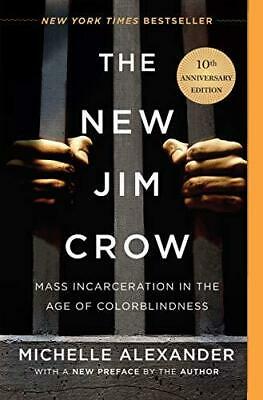
- The New Jim Crow has been named one of the most important nonfiction books of the 21st century by Entertainment Weekly‚ Slate‚ Chronicle of Higher Education‚ Literary Hub, Book Riot‚ and Zora. Praised by Harvard Law professor Lani Guinier as “brave and bold,” this book directly challenges the notion that the election of Barack Obama signaled a new era of colorblindness. With dazzling candor, legal scholar Michelle Alexander argues that “we have not ended racial caste in America; we have merely redesigned it.” By targeting black men through the War on Drugs and decimating communities of color, the U.S. criminal justice system functions as a contemporary system of racial control—relegating millions to permanent second-class status—even as it formally adheres to the principle of colorblindness. In the words of Benjamin Todd Jealous, president and CEO of the NAACP, this book is a “call to action.”
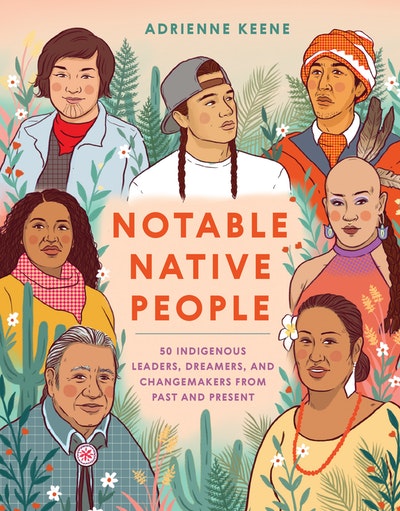
Notable Native People
- Celebrate the lives, stories, and contributions of Indigenous artists, activists, scientists, athletes, and other changemakers in this beautifully illustrated collection. From luminaries of the past, like nineteenth-century sculptor Edmonia Lewis—the first Black and Native American female artist to achieve international fame—to contemporary figures like linguist Jessie “Little doe” Baird, who revived the Wampanoag language, Notable Native People highlights the vital impact Indigenous dreamers and leaders have made on the world. This powerful and informative collection also offers accessible primers on important Indigenous issues, from the legacy of colonialism and cultural appropriation to food sovereignty, land and water rights, and more. An indispensable read for people of all backgrounds seeking to learn about Native American heritage, histories, and cultures, Notable Native People will educate and inspire readers of all ages.
Ain't I a Woman

- A classic work of feminist scholarship, Ain’t I a Woman, has become a must-read for all those interested in the nature of Black womanhood. Examining the impact of sexism on Black women during slavery, the devaluation of Black womanhood, Black male sexism, racism among feminists, and the Black woman’s involvement with feminism, Bell Hooks attempts to move us beyond racist and sexist assumptions. The result is nothing short of groundbreaking, giving this book a critical place on every feminist scholar’s bookshelf.
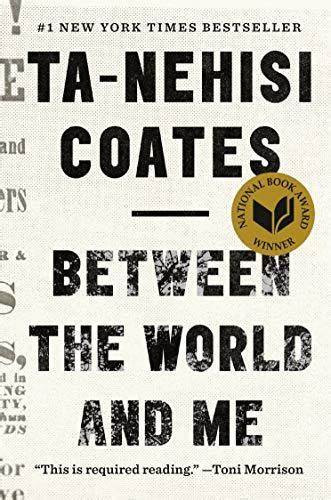
Between the World and Me
4. In a profound work that pivots from the biggest questions about American history and ideals to the most intimate concerns of a father for his son, Ta-Nehisi Coates offers a powerful new framework for understanding our nation’s history and current crisis. Americans have built an empire on the idea of “race,” a falsehood that damages us all but falls most heavily on the bodies of black women and men—bodies exploited through slavery and segregation, and, today, threatened, locked up, and murdered out of all proportion. What is it like to inhabit a black body and find a way to live within it? And how can we all honestly reckon with this fraught history and free ourselves from its burden?
Between the World and Me is Ta-Nehisi Coates’s attempt to answer these questions in a letter to his adolescent son. Coates shares with his son—and readers—the story of his awakening to the truth about his place in the world through a series of revelatory experiences, from Howard University to Civil War battlefields, from the South Side of Chicago to Paris, from his childhood home to the living rooms of mothers whose children’s lives were taken as American plunder. Beautifully woven from personal narrative, reimagined history, and fresh, emotionally charged reportage, Between the World and Me clearly illuminates the past, bracingly confronts our present, and offers a transcendent vision for a way forward.
Howard Zinn's A People's History of the United States

- A classic since its original landmark publication in 1980, Howard Zinn’s A People’s History of the United States is the first scholarly work to tell America’s story from the bottom up. This chilling story is told from the point of view of, and in the words of, America’s women, factory workers, African Americans, Native Americans, working poor, and immigrant laborers. From Columbus to the Revolution, to slavery and the Civil War, and from World War II to the election of George W. Bush and the “War on Terror,” A People’s History of the United States is an important and necessary contribution to a complete and balanced understanding of American history.
Minor Feelings: An Asian American Reckoning
6. Poet and essayist Cathy Park Hong, fearlessly and provocatively, blends memoir, cultural criticism, and history to expose fresh truths about racialized consciousness in America. Part memoir and part cultural criticism, this collection is vulnerable, humorous, and provocative—and its relentless and riveting pursuit of vital questions around family and friendship, art and politics, identity and individuality, will change the way you think about our world.
Binding these essays together is Hong’s theory of “minor feelings.” As the daughter of Korean immigrants, Cathy Park Hong grew up steeped in shame, suspicion, and melancholy. She would later understand that these “minor feelings” occur when American optimism contradicts your own reality–when you believe the lies you’re told about your own racial identity. Minor feelings are not small, they’re dissonant–and in their tension, Hong finds the key to the questions that haunt her.
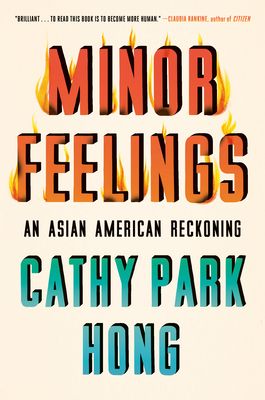
With sly humor and a poet’s searching mind, Hong uses her own story as a portal into a deeper examination of racial consciousness in America today. This intimate and devastating book traces her relationship to the English language, to shame and depression, to poetry and female friendship. A radically honest work of art, Minor Feelings forms a portrait of one Asian American psyche–and of a writer’s search to both uncover and speak the truth.
Myth of the Model Minority: Asian Americans Facing Racism

7. With their apparent success in schools and careers, Asian Americans have long been viewed by white Americans as the model minority. Yet, few Americans realize the lives of many Asian Americans are constantly stressed by racism. This reality becomes clear from the voices of Asian Americans heard in this first in-depth book on the experiences of racism among Asian Americans from many different nations and social classes. Chou and Feagin assess racial stereotyping and discrimination in dozens of interviews across the country with Asian Americans in a variety of settings, from elementary schools to colleges, workplaces, and other public arenas. They explore the widely varied ways of daily coping that Asian Americans employ-some choosing to conform and others actively resisting. This book dispels notions that Asian Americans are universally favored by whites and have an easy time adapting to life in American society. The authors conclude with policy measures that can improve the lives not only of Asian Americans but also of other Americans of color.
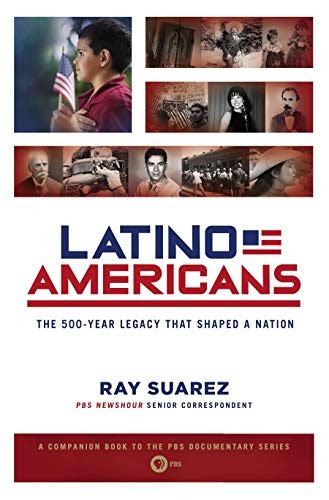
Latino Americans: The 500-Year Legacy That Shaped a Nation Book
8. Latino Americans records the rich and varied history of Latinos who have helped shape our nation and have become, with more than fifty million people, the largest minority in the United States. This companion to the landmark PBS miniseries vividly and candidly tells how the story of Latino Americans is the story of our country.
Author and series host Ray Suarez explores the lives of Latino American men and women over a five-hundred-year span, encompassing an epic range of experiences from the early European settlements to Manifest Destiny; the Wild West to the Cold War; the Great Depression to globalization; and the Spanish-American War to the civil rights movement.
The Latino Generation: Voices of the New America

9. Latinos are already the largest minority group in the United States, and experts estimate that by 2050, one out of three Americans will identify as Latino. Though their population and influence are steadily rising, stereotypes and misconceptions about Latinos remain, from the assumption that they refuse to learn English to questions of just how “American” they actually are. By presenting thirteen riveting oral histories of young, first-generation college students, Mario T. Garcia counters those long-held stereotypes and expands our understanding of what he terms “the Latino Generation.” By allowing these young people to share their stories and struggles, Garcia reveals that these students and children of immigrants will be critical players in the next chapter of our nation’s history.
Collected over several years, the testimonies follow the history of the speakers in thought-provoking ways, reminding us that members of the Latino Generation are not merely a demographic group but, rather, real individuals, as American in their aspirations and loyalty as the members of any other ethnic group in the country.
White Fragility: Why It's So Hard for White People to Talk About Racism
10. The New York Times best-selling book explores the counterproductive reactions white people have when their assumptions about race are challenged and how these reactions maintain racial inequality.
In this “vital, necessary, and beautiful book,” antiracist educator Robin DiAngelo deftly illuminates the phenomenon of white fragility and allows us to understand racism as a practice not restricted to “bad people.” Referring to the defensive moves that white people make when challenged racially, white fragility is characterized by emotions such as anger, fear, and guilt, and by behaviors including argumentation and silence. These behaviors, in turn, function to reinstate white racial equilibrium and prevent any meaningful cross-racial dialog. In this in-depth exploration, DiAngelo examines how white fragility develops, how it protects racial inequality, and what we can do to engage more constructively.

Podcasts
MiP is a podcast discussing diversity (or lack thereof) in the book publishing industry with other professionals working in-house as well as authors and those in the literary scene.
“1619” is a New York Times audio series, hosted by Nikole Hannah-Jones, who examines how slavery has transformed America, connecting past and present through the oldest form of storytelling.
Co-Conspired Conversations host Myisha T. Hill takes a deep look at her guest’s relationship with power, privilege, and racism.
There’s a lot to make us Yikes in this world. From the climate crisis to racism to activism and resisting oppressive systems, it can all get a bit overwhelming. Yikes is a podcast that leans into the Yikes of the world rather than letting them overwhelm us. Hosts Mikaela Loach and Josephine Becker break down the issues in an accessible, intersectional and nuanced way to guide us towards action together.
Launched at the historic New York Apollo Theater’s 2017 Women of the World Festival, She’s Got Drive is a podcast hosted by Shirley McAlpine, a life coach and consultant with 28 years of experience. Shirley interviews Black Women on their success and how they achieved it. Through their stories, listeners are inspired to pursue their own dreams, and in the conversations, Shirley weaves in personal development tools and strategies on how to live your life by design, not by default.
Need More Help?
Need help implementing some of these resources into creating new policies, procedures, etc.? You can always reach out to us. We are here for you!
Share this:
- Click to share on LinkedIn (Opens in new window) LinkedIn
- Click to share on X (Opens in new window) X
- Click to share on Facebook (Opens in new window) Facebook
- Click to email a link to a friend (Opens in new window) Email
- More
- Click to share on Pinterest (Opens in new window) Pinterest
- Click to print (Opens in new window) Print
- Click to share on Pocket (Opens in new window) Pocket
- Click to share on Reddit (Opens in new window) Reddit
- Click to share on Telegram (Opens in new window) Telegram
- Click to share on Tumblr (Opens in new window) Tumblr
- Click to share on WhatsApp (Opens in new window) WhatsApp